New 2026 Light Truck Line-Up Gives Australian Buyers More to Weigh Up
Fresh models, cleaner engines and sharper competition make finance structure more important than ever
0
The information on this website is general in nature and does not take into account your objectives, financial situation, or needs. Consider seeking personal advice from a licensed adviser before acting on any information.
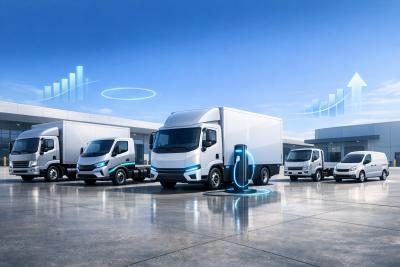
Australia’s light-duty truck market has entered a new buying cycle, with major brands refreshing their ranges for 2026 and giving operators more choice across diesel, hybrid and electric platforms.
For sole traders, delivery businesses, tradies and fleet managers, the timing matters: new emissions rules, softer broader truck sales and rising operating costs are all reshaping how businesses think about their next vehicle purchase.
The latest 2026 light truck buyer coverage points to a market that is no longer just about brand loyalty or headline purchase price. New ADR 80/04 Euro 6 requirements for trucks above 3.5 tonnes have pushed manufacturers to update engines, safety systems and cabins. That means buyers are seeing cleaner powertrains, improved driver assistance technology and more factory-ready body options, but often with more specification choices to compare before signing a contract.
Isuzu remains the clear benchmark in light trucks after a strong 2025 performance, while Hino, Fuso, Iveco, Hyundai and Foton are all competing with updated offerings. Hino continues to lean on its 300 Series Hybrid for operators wanting lower fuel use without charging infrastructure. Fuso is offering a broad Canter and eCanter range, while Iveco’s Daily cab-chassis line-up has been refreshed with more safety and technology. Hyundai’s Mighty and eMighty add further options for buyers looking beyond the traditional leaders.
One of the more interesting developments is the arrival of DFAC Australia, with order books opening for the Captain 45 under KRW Motor Group, the same group behind Foton Mobility. Positioned as a value-focused alternative in the 4.5 to 6-tonne space, the model adds another price-and-capability comparison point for small businesses reviewing replacement vehicles or first-time truck purchases.
For finance planning, this broader choice is both good news and a potential trap. A cheaper upfront price may not always produce the lowest whole-of-life cost once payload, warranty, fuel use, resale outlook, servicing access and body fit-out costs are considered. Electric and hybrid models can change the equation again, especially where predictable routes and depot-based operations support lower running costs.
Before committing, buyers should consider:
whether the truck’s payload and GVM match real daily work requirements;
how Euro 6, hybrid or electric technology may affect running costs and resale value;
whether finance should include body fit-outs, accessories or charging equipment;
how repayments will sit against seasonal cash flow and current fuel costs;
whether pre-approval could strengthen negotiating power with dealers.
With more models entering the market, comparing finance options is becoming just as important as comparing badges. Operators who take time calculating repayments against realistic income and operating costs will be better placed to choose a truck that supports growth rather than stretching cash flow.
Please Note: We do not endorse any specific products or companies. Some content is sourced from third parties, including press releases, and may not be independently verified for accuracy or completeness.
Australia’s light-duty truck market has entered a new buying cycle, with major brands refreshing their ranges for 2026 and giving operators more choice across diesel, hybrid and electric platforms. For sole traders, delivery businesses, tradies and fleet managers, the timing matters: new emissions rules, softer broader truck sales and rising operating costs are all reshaping how businesses think about their next vehicle purchase. - read more
Australia’s electric vehicle market is broadening beyond compact SUVs and sedans, with Xpeng preparing to bring its X9 electric people mover closer to local showrooms. The brand, which entered Australia with the G6 electric SUV in 2024, now has a local web presence for the X9 and the model has already appeared in Australian approval records, suggesting a launch is moving from speculation to serious preparation. - read more
Leapmotor has given Australian electric SUV shoppers a timely value update, confirming a revised MY26 C10 battery-electric range that focuses on longer range, quicker charging and a simpler line-up. For buyers weighing up an electric car loan, the headline is straightforward: the updated C10 Design Long Range keeps its $49,888 price before on-road costs while adding meaningful hardware improvements. - read more
Australian businesses are increasingly treating electrification as a cost-control strategy, not just an environmental decision. Recent reporting on bank lending data shows a sharp rise in finance for green equipment, with NAB saying its green equipment loan uptake between March and May 2026 was almost double the level recorded over the same period last year. - read more
Australian mortgage holders received a brief reprieve on 16 June 2026, when the Reserve Bank of Australia left the cash rate unchanged at 4.35%. After three consecutive increases earlier this year, the pause means many variable-rate borrowers will not face an automatic repayment jump from this particular meeting. However, the message from the central bank was cautious rather than celebratory: inflation remains above target, and further tightening has not been ruled out. - read more


No comments yet. Be the first to share your thoughts.