Electric Vehicle Financing Defies Market Trends with 48% Growth
Understanding the Surge in EV Financing Amidst a Declining Market
0
The information on this website is general in nature and does not take into account your objectives, financial situation, or needs. Consider seeking personal advice from a licensed adviser before acting on any information.
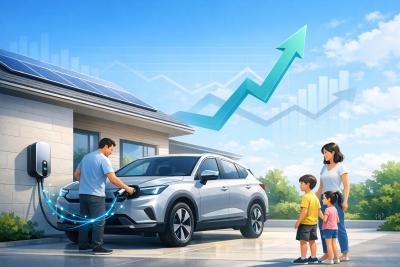
In a remarkable development, electric vehicle (EV) financing in Australia has experienced a 48% year-on-year increase, even as the overall motor finance market saw a 3% decline.
This data, released by the Australian Finance Industry Association (AFIA), underscores a significant shift in consumer preferences towards sustainable transportation options.
AFIA CEO Diane Tate highlighted that the Fringe Benefits Tax (FBT) exemption for EVs is playing a pivotal role in this trend. She noted that despite the broader market's downturn, the FBT exemption is effectively encouraging Australians to invest in cleaner, more cost-effective vehicles. However, she also pointed out that EVs currently constitute only 16% of all vehicles financed in the past year, indicating substantial room for growth in reducing transport sector emissions.
The data further reveals a contrasting trend for hybrid vehicles. Following the removal of the FBT exemption for plug-in hybrids in March 2025, financing for these vehicles plummeted by 42% in February 2026 compared to the same month in the previous year. This decline suggests that government incentives are crucial in shaping consumer decisions regarding vehicle purchases.
Ms. Tate emphasized the importance of consistent and supportive policies to maintain the momentum in EV adoption. She advocated for the continuation of the FBT exemption for EVs and the reinstatement of incentives for plug-in hybrids. Additionally, she called for increased investment in EV charging infrastructure and the expansion of public-private partnerships to ensure Australians have access to the necessary resources for transitioning to cleaner transportation.
Consumer research commissioned by AFIA supports these findings, indicating that government support not only improves affordability but also boosts consumer confidence in adopting EVs. Concerns about charging infrastructure availability and reliability remain prevalent, highlighting the need for comprehensive strategies to address these issues.
In summary, the surge in EV financing amidst a declining motor finance market underscores the effectiveness of targeted government incentives. To sustain and accelerate this transition, it is imperative to maintain supportive policies, invest in infrastructure, and provide clear pathways for consumers and investors alike.
Please Note: We do not endorse any specific products or companies. Some content is sourced from third parties, including press releases, and may not be independently verified for accuracy or completeness.
The Reserve Bank of Australia (RBA) has announced its decision to maintain the cash rate at 4.35% during its June 2026 meeting. This decision comes amid ongoing economic uncertainties and aims to balance inflation control with economic growth. - read more
The 2026 Caravan Industry National Conference, held on the Gold Coast, has set a new benchmark with over 1,150 delegates and 140 exhibitors in attendance. This record turnout underscores the robust growth and optimism within Australia's caravan and camping sector. - read more
In a remarkable development, electric vehicle (EV) financing in Australia has experienced a 48% year-on-year increase, even as the overall motor finance market saw a 3% decline. This data, released by the Australian Finance Industry Association (AFIA), underscores a significant shift in consumer preferences towards sustainable transportation options. - read more
The Reserve Bank of Australia (RBA) has implemented three consecutive rate hikes in 2026, bringing the official cash rate to 4.35%. With the next RBA board meeting scheduled for 16 June, borrowers across Australia are keenly awaiting potential further changes and their implications. - read more
In May 2026, electric vehicles (EVs) achieved a significant milestone in Australia, accounting for 20% of all new car sales. This marks a substantial increase from previous months and underscores a growing shift towards sustainable transportation options among Australian consumers. - read more


No comments yet. Be the first to share your thoughts.