Subaru Makes Electric SUVs More Accessible with Price Reductions
Solterra and Trailseeker Now More Competitively Priced in Australian Market
0
The information on this website is general in nature and does not take into account your objectives, financial situation, or needs. Consider seeking personal advice from a licensed adviser before acting on any information.
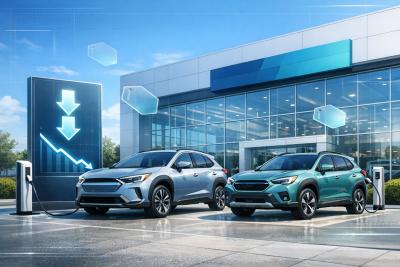
In a strategic move to enhance the affordability of its electric vehicle (EV) offerings, Subaru Australia has announced significant price reductions for its Solterra and Trailseeker electric SUVs.
Effective from May 14, 2026, the Solterra's price has been reduced by $2,000, bringing it to $61,990 plus on-road costs, while the Trailseeker sees a $4,000 reduction, now priced at $63,990 plus on-road costs.
These adjustments position Subaru's EVs more competitively within the Australian market, even undercutting the prices of equivalent models like the Toyota bZ4X and bZ4X Touring.
It's important to note that these price reductions have been achieved without any physical changes to the vehicles. Both models continue to utilise a 74.7kWh CATL lithium-ion battery, offering impressive WLTP ranges of up to 566 kilometres for the Solterra and 533 kilometres for the Trailseeker. Performance remains robust, with the Solterra's dual-motor all-wheel-drive system delivering 252kW, and the Trailseeker's system producing 280kW, enabling acceleration from 0 to 100 km/h in just 4.4 seconds.
For consumers considering the switch to electric driving, these price adjustments make the Solterra and Trailseeker more accessible options. Prospective buyers are encouraged to explore various financing avenues, including green car loans and government incentives, to further ease the transition to EV ownership.
Subaru's decision to lower prices reflects a broader trend in the automotive industry towards making electric vehicles more affordable and appealing to a wider audience. As the EV market continues to evolve, such initiatives are crucial in accelerating the adoption of sustainable transportation solutions in Australia.
Please Note: We do not endorse any specific products or companies. Some content is sourced from third parties, including press releases, and may not be independently verified for accuracy or completeness.
Queensland’s latest waterway clean-up in the Mackay region is a useful reminder that boat ownership does not end at the purchase price. Announced on 22 June 2026, the Queensland Government has now removed more than 150 derelict vessels from local waterways under the Keeping Our Waterways Safe initiative, with recent work focused on the Pioneer River. - read more
The Reserve Bank of Australia’s decision on 16 June 2026 to leave the cash rate unchanged at 4.35% marks the first pause after three consecutive increases this year. For Australian business owners, the hold is not exactly relief, but it does create a short window to review debt settings before the next policy move. - read more
The Reserve Bank of Australia has kept the cash rate target unchanged at 4.35 per cent following its June 2026 monetary policy meeting, offering a pause rather than a clear easing signal for borrowers. For Australians considering a new or used motorcycle, the decision matters because the cash rate continues to influence the broader cost of credit, including personal loans, secured vehicle loans and dealership finance offers. - read more
The Reserve Bank of Australia has kept the cash rate on hold at 4.35% at its June meeting, giving households a pause after three increases earlier in 2026. For mortgage holders, the decision is welcome, but it is not the same as relief. The RBA remains concerned that inflation is still too high, while global pressures, including oil supply disruption, are complicating the outlook. - read more
Australia’s housing market has shifted from urgency to caution, creating a new decision point for first-home buyers. The latest market reporting points to weaker buyer demand after three interest rate rises in 2026, uncertainty around federal property tax changes and broader economic concerns. For aspiring buyers who spent much of the past year competing at crowded inspections, the slowdown may feel like welcome relief. But it also calls for sharper planning. - read more


No comments yet. Be the first to share your thoughts.